Home » Okinawa-engels
Okinawa
Ryukyu
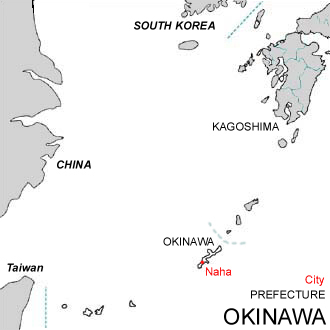
Karate is a martial art that originated hundreds of years ago on the island of Okinawa. Okinawa is part of the Ryukyu archipelago. This archipelago consists of a chain of four small island groups in the Pacific Ocean. The islands lie off the coast of China between Taiwan and Kyushu (Japan). Okinawa with its capital Nara is the largest island of the Ryukyu archipelago. The character for Okinawa means ‘rope in the open sea’. The island has a whimsical rocky shape. It looks a bit like a floating piece of rope in the water. 沖 縄 (沖 oki, ‘at sea’ + 縄 nawa, ‘rope’).

Okinawa has an exceptionally diverse ecosystem and has the most beautiful coral reefs in the world. Sea cows and sea turtles reside on the sea grass beds in the east coast. These come to the southern islands every year to lay their eggs there.
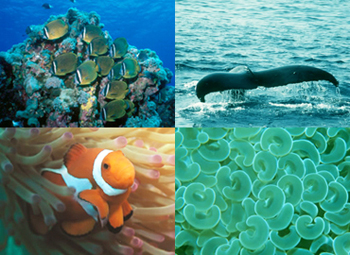
The island is well known for its beauty, paradise and of course its fame as the birthplace of karate. Okinawa Islands are also known as ‘Healing Islands of Health and Longevity’. The healthiest people in the world live on Okinawa! The number of (healthy) centenarians is nowhere else in the world as high as in Okinawa.
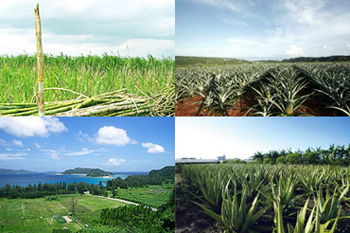
Shangri-La
Okinawa’s “Shangri-La”? It’s all about moderation and finding a balance in all aspects of life.
Okinawa-te
Okinawa’s favorable oceanic location has traditionally encouraged overseas cultural exchanges and trade contacts with neighboring countries and cities. All major Asian cities such as Shanghai, Hong Kong, Seoul, Manila, Taipei, and Tokyo are located within a radius of 1500 km. The most well-known example of Okinawa’s cultural export is karate that arose from the close ties with China and its influence on Okinawa’s culture. Karate is considered a synthesis of Chinese Kung Fu and the traditional Okinawian martial art; Okinawa-te.
Piracy
The 15th century was the “Golden Age of Trade”. The independent Ryukyu kingdom had become a flourishing trade center in that period. However, a constant threat to international trade was piracy. The Okinawan seamen needed protection against this. Okinawan martial art was born from this background. Fighting techniques from the Chinese and other Southeast Asian martial arts in particular were incorporated in this by the Okinawans.
Shogunate of Japan
The independence of Okinawa came to an end in 1609. The Japanese Satsuma clan Okinawa invaded the island. Kingdom of Ryukyu was incorporated into the shogunate of Japan. Nevertheless, it remained semi-independent and also maintained relations with China. In 1879 it was completely annexed by Japan. The Satsuma clan introduced a general arms ban on the Ryukyu Islands in the early 1600s. For the Okinawans, this was a second period in which they were not allowed to own weapons or practice martial arts. Earlier in 1477 a weapons ban had already been introduced.
In secret
Despite the weapons ban, these periods provided a favorable context for the development of the unarmed self-defense art known as Okinawa-te. This art was practiced in strict secrecy and kept hidden from outsiders. Traditionally, it was passed down orally from teacher to student; consequently, there are hardly any books or written records. It was not until the end of the nineteenth century that the ban on martial arts was lifted. Following the collapse of the kingdom and its full annexation by Japan in 1879, the martial art was incorporated into the public education system of Okinawa. Not long thereafter—roughly between 1910 and 1926—the first public demonstrations took place on the Japanese mainland.